Tennessee puts the first duty to yield on the driver turning left, but that doesn't settle who pays. A jury looks at what both drivers did in the seconds before impact, and the oncoming driver's speed, signal, or attention can shift much of the blame. If you were hurt at a Middle Tennessee intersection, a Nashville car accident lawyer can tell you where your case stands.
Talk to an attorney before you give the other driver's insurer a recorded statement, sign anything, or accept a settlement. Early statements can be used to shift fault onto you, and a settlement usually ends your right to seek more.
So, Who's Usually at Fault?
- A left-turning driver must yield to oncoming traffic that is in the intersection or close enough to be an immediate hazard.
- That duty doesn't make the oncoming driver automatically blameless.
- You can still recover if you're less at fault than the other driver.
- Speeding, red-light running, distraction, or impairment by the oncoming driver can shift fault.
- Signal timing, camera footage, and vehicle data often decide these cases.
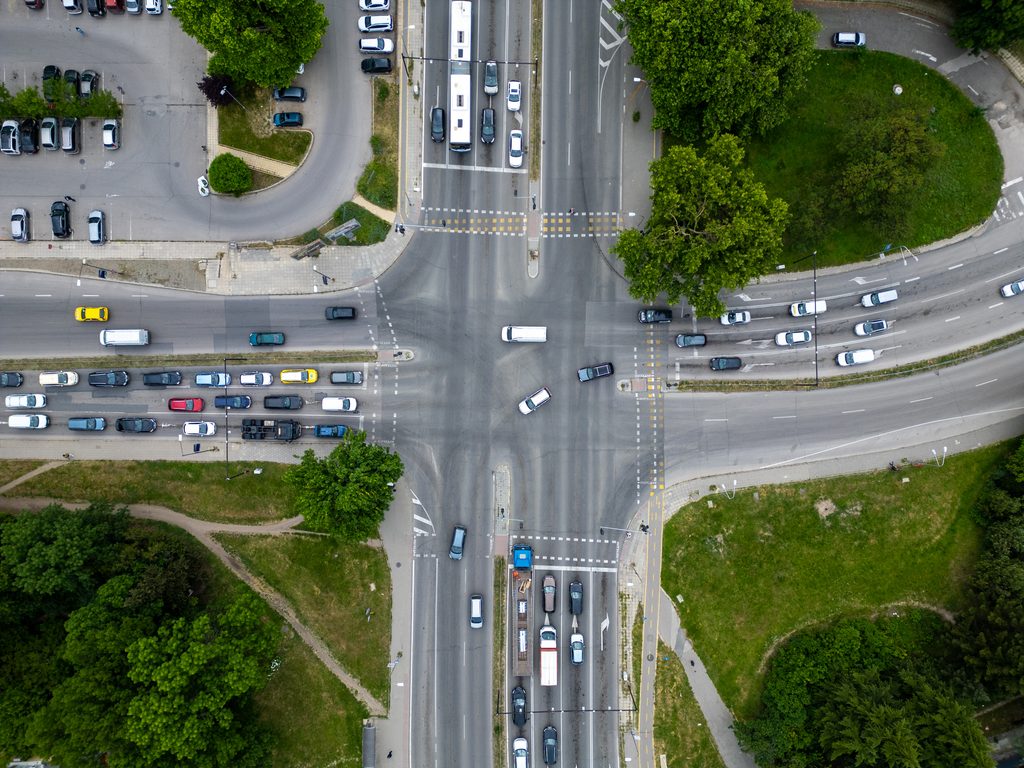
What Does Tennessee Law Ask of the Driver Turning Left?
Under Tennessee's rules of the road, a driver turning left at an intersection must yield to oncoming vehicles that are in the intersection or close enough to be an immediate hazard. Once that driver has yielded and signaled, the turn is lawful, and oncoming drivers must yield to them.
That's a split-second judgment of another car's speed and distance, often with the view blocked by other vehicles. In a National Highway Traffic Safety Administration study of intersection crashes, a left turn was the critical event in about 6 of every 10 crashes, roughly 19 times as often as a right turn. Turning with an obstructed view was one of the most common driver errors.
Insurance adjusters often blame the turning driver by default. That's an assumption, not a legal conclusion, and evidence can overcome it.
When Is the Oncoming Driver to Blame, Too?
Tennessee uses the modified comparative fault system its Supreme Court adopted in McIntyre v. Balentine. A jury assigns each driver a share of fault based on what each did before the crash. The oncoming driver may share the blame if they were:
- Speeding
- Running a red light
- Distracted by a phone, food, or a passenger
- Impaired by alcohol or drugs
- Ignoring a car already committed to its turn
You can recover damages as long as your share of fault is less than the combined fault of the other people responsible for the crash. Your award is reduced by your share. If you're found equally or more at fault, you recover nothing.
What Evidence Actually Proves Who Caused the Crash?
The most useful evidence disappears quickly. In a left-turn case, it includes:
- Police crash report. Tennessee law generally keeps the report itself out of evidence at trial, but it identifies witnesses, records the scene, and guides the investigation.
- Signal timing and camera footage. Traffic camera or dash cam video can show the light color at the time of impact.
- Skid marks and vehicle positions. These help estimate speed.
- Event data recorders. Many vehicles store speed and brake data from the seconds before a crash.
- Independent eyewitnesses. They have no stake in either driver's account.
- Intersection photos. These capture anything that blocked the turning driver's view.
On an unprotected left turn, made without a green arrow, the driver judges oncoming traffic alone, so evidence about what they could see matters. Request camera footage and vehicle data before they're overwritten.
What Can You Recover After a Left-Turn Crash?
Every claim is valued on its own facts, which is why there is no average car accident settlement in Tennessee. You can seek payment for documented losses, including:
- Medical costs, from emergency care through future treatment your doctor expects
- Lost income, including missed wages and reduced earning ability if your injury limits your work
- Vehicle and property damage, covering repair or replacement of your car and belongings
- Pain and suffering, covering physical pain and emotional distress
Tennessee law limits awards for pain and suffering and other non-economic losses in most cases, with a higher limit for certain catastrophic injuries. Some exceptions apply, including when the at-fault driver was substantially impaired by alcohol or drugs.
Can You Get Punitive Damages?
Rarely. Punitive damages are an exception to the normal rules of recovery, not a standard part of a car accident claim. They punish rather than reimburse, and they aren't available simply because a driver was negligent or even very careless.
In Tennessee, punitive damages can be awarded only under the standards set by the Tennessee Civil Justice Act of 2011. The Act requires clear and convincing proof that the at-fault driver acted with intent, malice, fraud, or recklessness. It also limits the amount, though that limit doesn't apply in certain cases, such as when a driver substantially impaired by alcohol or drugs caused the crash.
Your Left-Turn Crash Questions, Answered
Is the left-turning driver always at fault in Tennessee?
No. Proof that the oncoming driver was speeding, ran a light, or was otherwise careless can shift some or most of the fault. Our guide to how fault is determined in Tennessee car accidents explains that process in more depth.
Can I recover money if I was partly at fault?
Yes, as long as you're less at fault than the other people responsible for the crash. Your award is reduced by your share. If you're found equally or more at fault, you recover nothing.
What should I do right after the crash?
Call the police, get medical care even if you feel fine, photograph the intersection, and collect witness contact information.
How long do I have to file a claim in Tennessee?
Tennessee gives injured people a very short window to file an injury lawsuit, measured from the date of the crash. In some cases, the deadline can be extended if the at-fault driver is criminally charged over the crash, and property damage claims follow a separate, longer deadline. Missing the deadline can end your claim, so talk to an attorney as soon as possible.
Does a protected green arrow change fault?
It can. A green arrow shows you had the signal to turn, which can strongly support your claim.
If you were hurt in a Tennessee left-turn crash, call us at (615) 205-0000.
The information on this page is for general educational purposes only and is not legal advice. Reading it or contacting us does not create an attorney-client relationship. Cory Watson Attorneys' principal office is at 2131 Magnolia Ave S., Birmingham, AL 35205. Our Nashville office is at 1033 Demonbreun St., Suite 300, Nashville, TN 37203.