If you or a loved one suffered a severe esophageal tear, airway obstruction, or internal bleeding following a diagnostic acid reflux study, learning how to prove an esophageal injury case caused by a defective Bravo capsule is the first step toward securing the compensation you deserve.
A manufacturing defect in the Medtronic Bravo Calibration-Free (CF) Capsule Delivery Device has been linked to dangerous device failures and dozens of patient injuries, leading to an urgent federal medical device recall.
Because these technical corporate cases require immediate evidence preservation, acting quickly is vital to building a successful injury claim.
What Is the Medtronic Bravo CF Capsule Defect?
The Medtronic Bravo system monitors esophageal pH levels to help physicians diagnose Gastroesophageal Reflux Disease (GERD).
During the procedure, a small capsule is placed via a delivery device and attached to the esophageal mucosal wall, where it is intended to wirelessly transmit acid data.
However, according to the FDA’s Medical Device Recall Database, a critical process control failure during manufacturing resulted in the misapplication of adhesive.
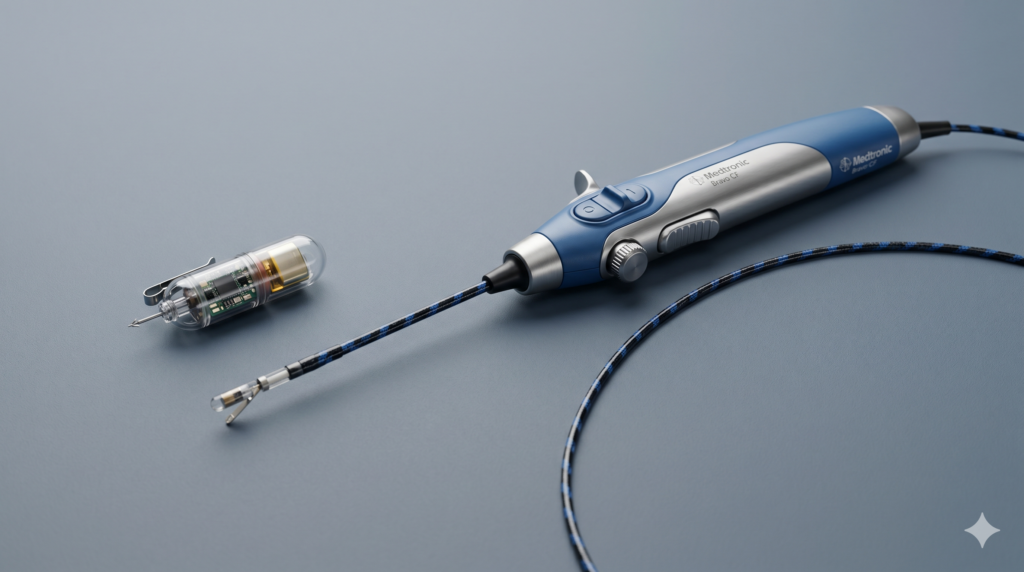
This specific defect causes the device to malfunction in two primary ways:
- The capsule may fail to attach to the patient's esophagus.
- The capsule may fail to detach cleanly from its delivery device upon insertion.
When the capsule malfunctions, it can migrate unpredictably into the patient’s throat or respiratory tract, creating immediate, life-threatening medical emergencies.
Severe Risks and Documented Bravo Capsule Side Effects
Medical data indicate that the risks associated with this manufacturing error far exceed those of standard clinical discomfort.
The FDA MedWatch Early Alert System confirms that the following serious injuries are directly linked to the defective Bravo CF delivery device:
- Esophageal Perforation: A puncture, hole, or tear through the wall of the esophagus.
- Esophageal Laceration and Hemorrhage: Severe internal bleeding caused by mechanical tissue trauma.
- Airway Obstruction and Aspiration: Life-threatening choking hazards if the detached capsule is inhaled into the trachea or lungs.
- Foreign Object Retention: The capsule remains unsafely lodged inside the patient's upper digestive tract, requiring surgical extraction.
- Delayed GERD Diagnosis: Diagnostic test failure due to missing or corrupt pH data collection, leaving acid reflux untreated.
The Legal Burden of Proof in Defective Medical Device Claims
To secure a financial recovery, an injured patient must establish a clear path of evidence. Product liability lawsuits involving medical devices generally rest on strict liability standards.
A victim need not prove that the manufacturer acted carelessly or intentionally; rather, they must prove that the product had a defect and that the defect directly caused their injury.
Building a legally sound case requires proving three specific elements:
1. Establishing Product Identification (Lot Numbers)
Your attorney must legally tie your procedure to the specific recalled lots.
Medtronic and Given Imaging identified the affected products as Product Number FGS-0635 (5-pack) and Product Number FGS-0636 (1-pack).
Hospitals and ambulatory surgical centers are required by federal regulations to maintain device-tracking logs.
These records can be subpoenaed to verify that your procedure utilized a device from the defective manufacturing run.
2. Correlating Symptoms with Immediate Clinical Failure
Proving causation means linking your post-procedure medical emergency directly to the capsule's failure.
Severe chest pain, respiratory distress, or severe difficulty swallowing (dysphagia) immediately following a pH monitoring study serve as critical physical evidence.
Emergency room admission logs, radiology scans, endoscopy images, and operative notes from corrective surgeries are foundational components for satisfying this requirement.
3. Quantifying Recoverable Damages
To recover compensation, you must document the full financial and physical impact of the injury.
This includes itemized hospital billing statements for emergency repairs or extended hospital stays, expert medical assessments that track long-term complications such as esophageal strictures (painful scarring that narrows the throat and requires repeated dilation procedures), and verified employment documentation detailing lost income and diminished future earning capacity.
Do You Qualify for a Medtronic Bravo Lawsuit?
You may have grounds for a strict product liability or failure-to-warn claim if your circumstances meet the following criteria:
- You underwent an esophageal pH monitoring study using a Medtronic Bravo CF Capsule.
- The capsule malfunctioned, failed to attach, or fractured during insertion.
- The device failure caused a physical injury requiring emergency medical intervention, hospitalization, or corrective surgery.
Protect Your Rights: Contact an Experienced Product Liability Lawyer
Every state enforces a strict statute of limitations that limits the time an injured patient has to take legal action. If you wait too long, vital hospital device logs can be overwritten, and your right to seek compensation may be permanently barred.
If you or a loved one suffered severe complications from a Bravo pH study, the legal team at Cory Watson Attorneys is here to help.
Contact Cory Watson Attorneys today for a free, no-obligation consultation. Call our team 24/7: (877) 562-0000.