A letter arrives with little warning: a utility wants a transmission line across your land, and buried in it is the phrase every owner dreads: eminent domain. Families are getting this notice because the AI boom needs somewhere to plug in, and that somewhere is often a rural backyard, farm, or family homestead.
In Cory Watson Attorneys' home states of Alabama and Tennessee, and in fast-growing corridors from Georgia to Pennsylvania to Northern Virginia's "Data Center Alley," utilities are racing to build the lines that power data centers. If you've received a notice or easement offer, talk to an eminent domain attorney for a free consultation before you respond, so you understand your options.
Quick facts:
- A data center almost never has the legal power to condemn your land; that belongs to the regulated utility building the line.
- A utility's first offer is a starting point, not a final number.
Why Data Centers Are Driving This Legal Shift
A Single Campus Can Draw Power Like a Small City
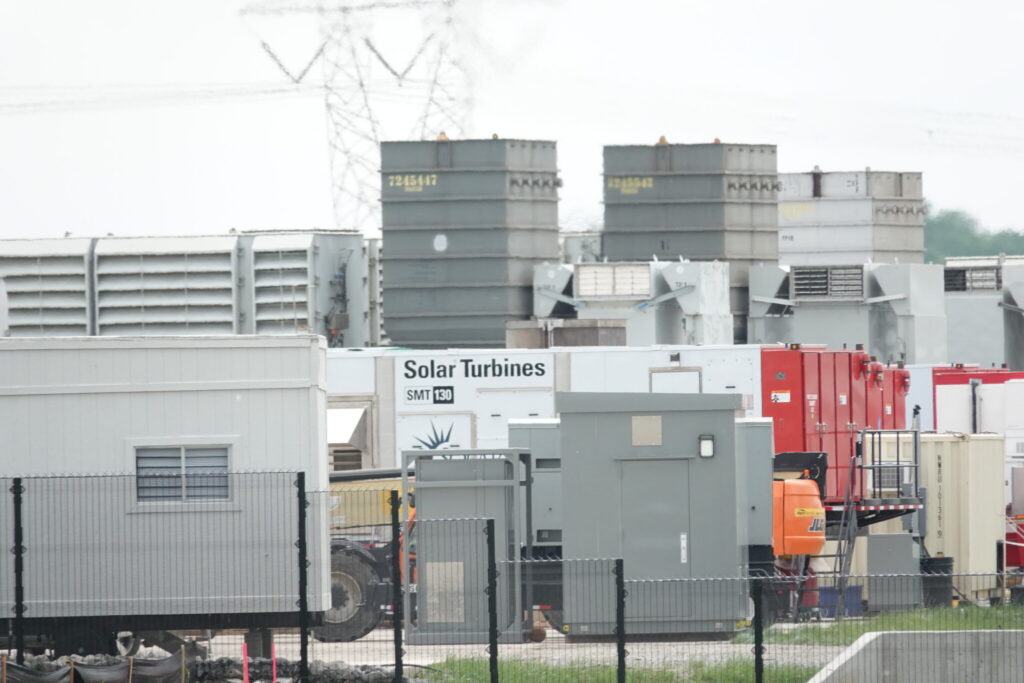
The U.S. Energy Information Administration has tracked U.S. electricity demand rising toward record levels, a trend it and the Department of Energy attribute substantially to data center growth. That demand doesn't stay inside the data center's property line. Utilities need new substations and corridors to serve it, and those corridors often land on private property with no connection to the project until a notice arrives.
A public highway serves everyone who uses it. A line built for one large private customer raises a harder question: whose "public use" is this really for?
Who Actually Has the Power to Take Your Land?
The Utility, Not the Data Center, Usually Holds That Authority
The data center operator itself cannot condemn your property. Regulated utilities are granted that authority because they're treated as serving the broader public, even when much of a project's output is earmarked for one customer.
That question traces back to Kelo v. City of New London, where the Supreme Court allowed a taking for private economic development. The backlash was swift, and most states, including Alabama, Tennessee, Georgia, and Pennsylvania, tightened their eminent domain laws afterward. Some state supreme courts have gone further: Michigan, Ohio, and Oklahoma's high courts have all barred taking private property to hand it to another private party purely for economic development. Whether a data center-driven project clears the "public use" bar depends heavily on which state your property sits in.
Full Taking or Just an Easement? The Difference Matters
Many of these projects seek a permanent easement, not the whole property: a right-of-way letting the utility build and maintain infrastructure while you keep title. Because the easement runs with the land, it stays in place even if you later sell the property, and it can still reshape what any owner can build there for good:
- No structures allowed under or near the line, often for a wide buffer.
- Ongoing access rights for the utility's crews and equipment.
- The right to add future infrastructure without renegotiating pay.
A partial taking can also depress the value of the land you keep, not just the strip condemned, something a first offer rarely accounts for.
That First Check Isn't the Final Word
Utilities open with a number from their own appraisal: a starting point, not a final offer. Georgia Power has told reporters it opens at 125% of appraised value, generous-sounding until you consider what that appraisal may leave out.
An independent appraisal often lands higher, especially once it weighs lost privacy, noise, and visual impact, diminished resale value on the remaining land, and disruption to farming, timber, or business use. Get a second opinion before you sign or cash a check.
Before You Sign Anything, Work Through This List
- Read the notice fully and calendar every deadline.
- Don't sign anything or cash a check on the spot.
- Have your own appraiser look at the property first.
- Document the property's current condition, use, and income.
- Ask in writing what the project is for and who it serves.
- Talk to an eminent domain attorney before meeting the utility's agent again.
Caveat: deadlines may be as short as 30 days, so don't delay in protecting your property rights.
Cases Playing Out Right Now Show the Pattern
Georgia Power has been acquiring hundreds of parcels across Coweta and Fayette Counties, with roughly 80% of the new capacity tied to data centers, not local homes. In Pennsylvania, PPL Electric Utilities has filed eminent domain actions against dozens of Luzerne County owners for its Sugarloaf Transmission Project, near several fast-tracked data center campuses. In Virginia, state regulators have approved a Dominion Energy transmission route that would take about a third of one Ashburn homeowner's land for a line serving Loudoun County's Data Center Alley. None of this is settled law. It's an active fight over what "public use" means in the age of AI, and Alabama and Tennessee landowners could see similar projects as the buildout spreads.
Frequently Asked Questions
Does a data center have to prove its project serves the public? The condemning party is usually the utility, which must show the project fits the state's definition of public use.
Can I refuse an easement for a line mainly serving a data center? You can negotiate and, in some states, challenge whether the project is truly a public use, but refusal doesn't always stop a utility with condemnation authority.
How could a nearby transmission line affect my property value? Reduced privacy, visual and noise changes, and lower resale value, all of which an independent appraisal should account for.
Is a permanent easement the same as selling my property? No. You keep title, but the easement permanently restricts how you use and build on that land.
Do I need a lawyer if the utility says its offer is "non-negotiable"? That claim itself is worth questioning. Compensation and the scope of the taking are often negotiable, and a lawyer can push back on terms presented as final.
Does it matter which state my property is in? Yes. State constitutions, statutes, and courts vary widely on how strictly they define "public use," so the same project can play out very differently across state lines.
Talk to an Attorney Before You Sign Anything
Eminent domain law around data centers is moving fast, and the rules differ by state and utility. Cory Watson has spent 44 years representing residents across Alabama and Tennessee, recovering more than $4 billion for clients. If you've received a notice or offer, contact us today for a free consultation or learn more about us.