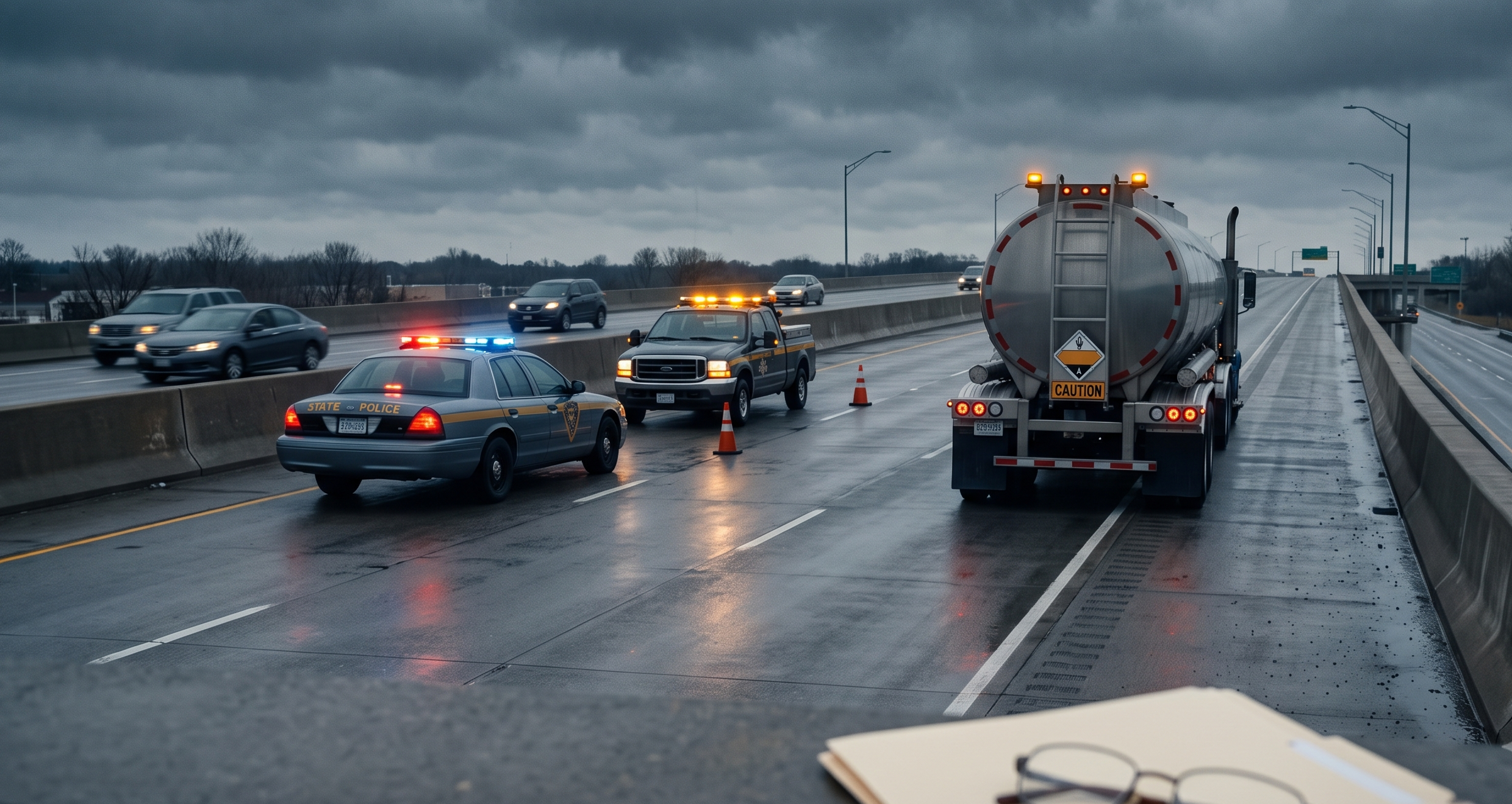
A tanker truck fishtails on a rain-slick overpass, spilling thousands of gallons of industrial solvent across three lanes. Your car was hit. So is your neighbor's. Fumes force evacuations, and the chemical seeps into the creek behind the park. Days later, the medical bills arrive.
Someone asks: "Can we all do something about this together?"
Yes. With experienced Birmingham mass tort attorneys guiding your case, joining forces can mean the difference between a small individual settlement and full, individualized justice. Explore the different options below.
Quick Answer: When a tanker truck spill injures multiple people, victims can pursue a coordinated mass tort lawsuit. Unlike a class action, a mass tort treats each plaintiff individually, so your compensation reflects your specific injuries and losses. Liable parties can include the driver, the trucking company, the cargo owner, and the vehicle manufacturer.
Understanding Collective Legal Action After a Hazardous Spill
When the same accident harms dozens of people, two legal frameworks apply: mass torts and class actions. Understanding which fits your situation is the first critical step.
Cory Watson Attorneys has spent more than 44 years holding negligent trucking companies accountable. Survivors of a tanker spill share the shock of the incident but rarely share identical injuries, which is exactly why the legal path you choose matters.
The Difference Between Mass Torts and Class Actions
In a class action, a representative plaintiff stands in for the entire group. The court issues one ruling and divides the settlement among all members, sometimes equally, regardless of how much each person suffered.
A mass tort treats each plaintiff as an individual, compensating them based on their own medical bills, lost income, and long-term health impacts. Cases may be consolidated for efficiency through multidistrict litigation (MDL), but your claim stays yours. This structure is far better suited to hazardous spill incidents where injuries vary widely. For a full breakdown, see our guide on class action vs. mass tort litigation.
Why Tanker Spills Often Qualify for Mass Tort Litigation
- They affect a defined geographic community, making coordinated evidence-building practical.
- Injuries vary from acute chemical burns to long-term respiratory damage to property contamination, making a one-size class action settlement inadequate.
- The threat is growing: big rig accidents involving hazardous materials have surged approximately 155% over the past decade, with roughly 500 hazmat incidents on U.S. roads every day.
Identifying Liable Parties in Multi-Victim Trucking Accidents
In a tanker truck spill lawsuit, responsibility often extends well beyond the driver.
Federal Motor Carrier Safety Administration (FMCSA) Regulations
The FMCSA and PHMSA jointly govern hazmat trucking under 49 CFR Parts 100-180, covering driver training, vehicle inspection, and cargo packaging. Drivers transporting placarded hazmat must hold a CDL with a Hazmat (H) endorsement under 49 CFR Section 383.93. Violations establish negligence per se, meaning the regulatory breach itself is evidence of fault. Carriers must also carry at least $1,000,000 in public liability insurance under 49 CFR Part 387, a threshold routinely exceeded in catastrophic spills.
Liability Beyond the Truck Driver
- The trucking company, if it failed to maintain vehicles, pressured drivers to skip rest breaks or ignored safety complaints.
- The cargo shipper or loader, if the chemical was improperly packaged or mislabeled in violation of PHMSA regulations.
- The tank manufacturer or maintenance provider, if a defective valve, seal, or component caused the release.
- A government entity, if poor road design contributed to the rollover. Nearly four tanker truck rollovers occur every single day in the United States.[^4]
Benefits of Joining a Coordinated Lawsuit
Shared Investigative Costs and Evidence
When multiple plaintiffs coordinate under a single legal team, the costs of experts, black-box data, and ELD records are shared without reducing any individual's claim.
Individual Damages in a Group Setting
Your compensation is never averaged. Courts assess your injuries, treatment, and lost earnings separately, so two victims from the same spill can receive very different awards.
Recovering for Toxic Exposure and Property Damage
Recoverable damages include medical treatment, lost wages, pain and suffering, home devaluation from groundwater contamination, and business interruption losses.[^5]
Statutory Deadlines for Filing in Alabama and Tennessee
Missing a filing deadline permanently ends your claim.
- Alabama: Under Alabama Code Section 6-2-38, personal injury victims have 2 years from the date of the accident to file. Alabama's strict contributory negligence rule means any finding of fault on the plaintiff's part, however minor, may bar all compensation.
- Tennessee: Victims have only one year from the date of injury. This is one of the shortest personal injury deadlines in the country.
Limited exceptions exist. The discovery rule may extend Alabama's window for latent injuries like toxic exposure that surface weeks later. But relying on exceptions is risky. ELD data and black box recordings can be destroyed within weeks without a legal hold. Act immediately.
You Do Not Have to Face This Alone
A tanker truck spill is a community crisis. The injuries, the medical bills, and the fear of long-term exposure effects are real, and so is your right to hold every responsible party accountable. Contact us today for a free, no-obligation consultation. To learn more about the attorneys who will represent you and us, visit our firm overview.