Suboxone has helped thousands of people manage opioid use disorder—but some patients have reported serious and unexpected dental complications. If you’ve experienced dry mouth, rapid tooth decay, gum problems, or unexplained dental emergencies while taking Suboxone, your medication could be a contributing factor.
If you or a loved one has suffered severe dental damage after using Suboxone, Cory Watson Attorneys is investigating potential claims on behalf of affected individuals. Our mass tort lawyers helps clients understand their rights and determine whether they may qualify for compensation. Call (866) 615-6989.
Below, we break down seven warning signs that your oral health issues may be linked to Suboxone, and what you should know next.
Understanding Suboxone
Suboxone and Its Active Ingredients
Suboxone is a prescription medication used to treat opioid use disorder (OUD). It contains two active ingredients:
- Buprenorphine, a partial opioid agonist that reduces cravings and withdrawal symptoms
- Naloxone, an opioid antagonist that helps prevent misuse
Suboxone is commonly prescribed in sublingual film or tablet form, meaning it dissolves under the tongue or inside the cheek.
In 2022, the U.S. Food and Drug Administration (FDA) issued a safety communication warning that buprenorphine medicines dissolved in the mouth have been associated with serious dental problems, even in patients with no prior history of dental disease.
Common Uses of Suboxone
Suboxone is widely used as part of medication-assisted treatment (MAT) programs. It helps patients:
- Reduce opioid cravings
- Prevent withdrawal symptoms
- Support long-term recovery
According to MedlinePlus, buprenorphine products are intended for long-term management of opioid dependence and must be taken exactly as prescribed.
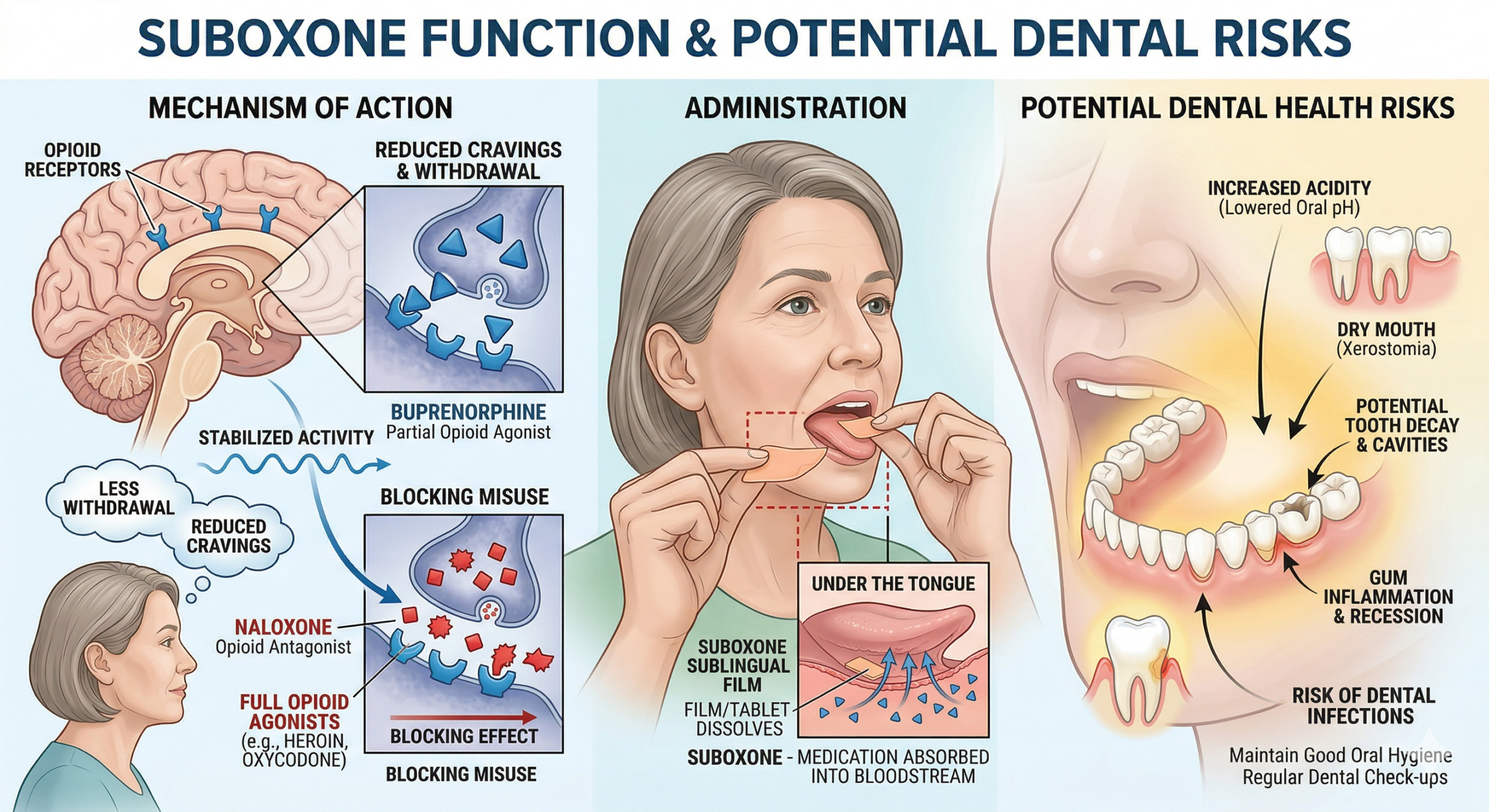
While effective for addiction treatment, emerging data and federal warnings have raised concerns about potential oral health complications.
Sign 1: Dry Mouth and Its Impact on Oral Health
One of the earliest and most commonly reported oral side effects among Suboxone users is dry mouth (xerostomia).
How Dry Mouth Contributes to Tooth Decay
Saliva plays a critical role in:
- Neutralizing harmful acids
- Washing away food particles
- Remineralizing enamel
- Limiting bacterial growth
When saliva production decreases, teeth are left vulnerable to acid erosion and bacterial buildup.
Patients taking Suboxone may notice persistent dryness shortly after beginning treatment, which can quietly increase the risk of cavities over time.
Sign 2: Noticeable Tooth Decay and Cavities
Some Suboxone users report rapid, widespread tooth decay, even when they previously had healthy teeth.
The Connection Between Suboxone and Tooth Decay
The FDA warning specifically notes reports of:
- Severe cavities
- Enamel erosion
- Tooth fractures
- Tooth loss
- Oral infections
In certain cases, patients required special dental surgery. A 2025 scientific case report also examined a case of oral cavity malignancy associated with sublingual buprenorphine use.
If your dental damage appeared unexpectedly and progressed quickly, this pattern may warrant further review.
Sign 3: Gum Inflammation and Infection
Beyond cavities, Suboxone may affect gum health.
Recognizing Symptoms of Gum Disease from Suboxone
Warning signs may include:
- Red or swollen gums
- Bleeding when brushing
- Gum recession
- Persistent bad breath
- Sensitivity along the gumline
Left untreated, gum disease can eventually lead to bone loss and tooth loss.
Sign 4: Changes in Taste or Oral Sensation
Some patients report altered taste or unusual oral sensations while using Suboxone film or tablets.
Suboxone Side Effects on Tongue and Taste Buds
Because Suboxone dissolves directly against oral tissues, it may:
- Irritate mucosal lining
- Cause localized discomfort
- Alter taste perception
- Produce burning sensations
Dental professionals have also discussed the hidden dental risks of Suboxone, including mouth sores and long-term oral complications.
Persistent taste changes or oral discomfort should be evaluated by a healthcare provider.
Sign 5: Increased Tooth Sensitivity
Tooth sensitivity can be an early indicator of enamel erosion or gum recession.
Understanding Sensitivity in Users of Suboxone
When enamel weakens due to acid exposure or chronic dry mouth, teeth may become sensitive to:
- Hot foods
- Cold beverages
- Sweet substances
- Air exposure
If sensitivity worsens over time, it may signal progressive structural damage.
Sign 6: Oral Discomfort and Sores
Some Suboxone users report localized irritation where the film or tablet dissolves.
How Suboxone Film and Strips Can Cause Irritation
Because the medication is placed under the tongue or inside the cheek daily:
- Repeated exposure may inflame soft tissues
- Chemical composition may contribute to irritation
- Chronic dryness can worsen tissue breakdown
The FDA warning also acknowledges reports of mouth pain and related oral adverse effects associated with transmucosal buprenorphine (TMB).
Recurring sores or irritation in the same location should be reported to a health care provider.
Sign 7: Frequent Dental Emergencies
A significant warning sign is the need for repeated or emergency dental treatment after starting Suboxone.
The Need for Regular Dental Checkups
Some patients have required:
- Root canals
- Tooth extractions
- Crowns or implants
- Treatment for abscesses
How Dentists Can Evaluate Cause and Progression
A dentist can assess:
- Speed of enamel deterioration
- Patterns of decay
- Evidence of medication-related dry mouth
- Structural fractures
Keeping detailed dental records can help determine whether damage appears medication-related.
Get Legal Help Today
If you experienced severe dental damage after using Suboxone, you may have legal options.
Cory Watson Attorneys is reviewing cases involving individuals who suffered tooth loss, advanced decay, or costly dental reconstruction after being prescribed Suboxone.
Contact Cory Watson Attorneys today for a free consultation to learn whether you may qualify for compensation.
Dental Care While on Suboxone
If you are currently taking Suboxone, proactive dental care is essential.
Early Symptoms vs. Advanced Symptoms
Early symptoms:
- Dry mouth
- Increased plaque
- Mild sensitivity
Advanced symptoms:
- Cracked or breaking teeth
- Severe decay
- Gum infection
- Tooth loss
Early treatment may reduce long-term damage.
When Symptoms Should Trigger Legal Review
You may wish to seek a legal consultation if:
- Your dental health declined rapidly after starting Suboxone
- You required multiple major procedures
- Your dentist noted unusual or aggressive decay patterns
- You incurred significant dental expenses
What to Track Weekly (Pain, Treatments, Costs)
Keep records of:
- Pain levels
- New symptoms
- Dental visits
- Treatment plans
- Bills and insurance statements
- Missed workdays
Thorough documentation strengthens both medical and legal evaluations.
Getting a Second Opinion and Why It Helps
A second dental opinion may:
- Confirm the extent of damage
- Help determine possible causes
- Clarify long-term treatment needs
- Support potential legal claims
If you believe Suboxone contributed to your oral health issues, speaking with both a dental professional and an experienced attorney can help you better understand your options.
Disclaimer: Do not stop taking prescribed medication without consulting your healthcare provider. This article is for informational purposes only and does not constitute medical advice.