One Alabama rule shapes almost every grocery store fall claim: contributory negligence. If the store proves your own carelessness contributed to the fall, Alabama law can bar you from recovering anything on a negligence claim, even if the store was mostly at fault.
That makes the first few days after your fall critical. Our Birmingham personal injury attorneys handle premises liability claims like this one.
Key Takeaways
- Under Alabama's contributory negligence rule, any proven carelessness on your part can bar a negligence claim.
- Store surveillance systems often record over older footage automatically, so act quickly.
- Ask for a copy of the incident report, or at least the report number.
- To win, you generally must show the store created the hazard, knew about it, or should have discovered it in time to fix it.
- Don't give a recorded statement before speaking with an attorney.
- Alabama generally gives you two years from the date of injury to file a lawsuit under Ala. Code § 6-2-38(l), and missing that deadline can end your claim.
What Usually Causes a Grocery Store Fall?
Falls are a serious public health problem. Each year, falls among adults 65 and older lead to about 4.5 million emergency department visits, according to the CDC's older adult falls data.
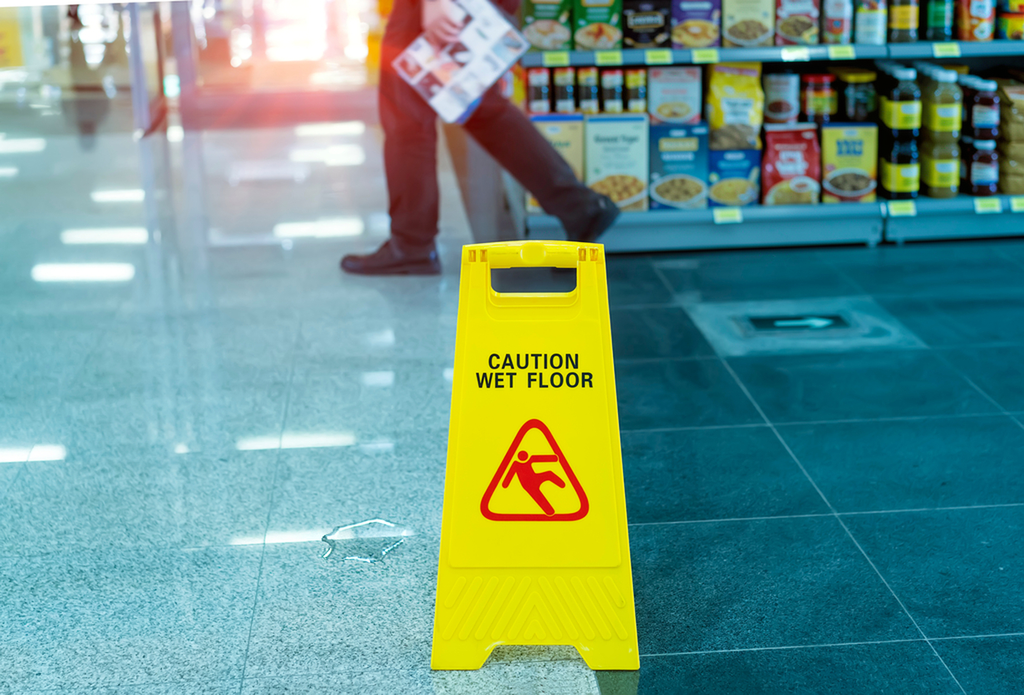
Hazards to Watch For:
- Spilled liquids
- Rain tracked in from outside
- Loose carpets and floor mats
- Holes and cracks in the floor
- Changes in elevation
- Poor lighting
- Clutter in aisles
Was the Store Responsible for the Hazard?
Liability usually turns on one question: did the store create the hazard, know about it, or should it have discovered it in time to fix it or warn you? The Alabama Supreme Court has held that injured shoppers must prove the store had actual or constructive notice of the hazard, unless the store created it. A fall by itself doesn't prove the store was careless.
Why Alabama's Fault Rule Changes Everything
How Does Contributory Negligence Work?
Under Alabama law, an injured person whose own negligence contributed to the injury can be barred entirely from recovering on a negligence claim. In comparative fault states, an award is reduced by the injured person's share of blame. In Alabama, the claim can be eliminated outright.
Contributory negligence is a defense the store must raise and prove in court; an insurance adjuster's opinion doesn't settle it. The rule also generally doesn't block claims based on wanton conduct, meaning conduct that shows reckless or conscious disregard for safety.
How Will the Insurer Use It Against You?
Expect the store's insurer to look for anything suggesting you were partly at fault. Don't admit fault or apologize. The insurer can use anything you tell a claims adjuster against you, so speak with an attorney first.
Why the Incident Report and Footage Matter So Much
Two records often decide slip-and-fall cases: the incident report and the surveillance footage.
What Should the Incident Report Include?
The report should capture what you said, the floor's condition, and any earlier spill complaints from that shift. Ask for a copy or the report number before you leave the store.
What Can Surveillance Footage Prove?
Footage can show how long the hazard sat there, whether an employee walked past it, and whether a warning sign was actually out. That answers the question every Alabama premises case turns on: did the store know in time?
How Long Will the Store Keep the Video?
Many store surveillance systems automatically overwrite older footage, and retention periods vary by store and system. A written preservation letter puts the store on clear notice to keep the footage and makes it much harder for the store to argue later that deleting it was routine.
This is one of the most time-sensitive steps in a grocery store claim. Act within days, not months.
What Can You Recover After a Fall?
Most grocery store falls are evaluated as standard negligence claims, which seek compensatory damages for the losses the fall caused.
What Damages Are Typical?
- ER and follow-up medical bills
- Physical therapy and future treatment
- Lost wages and reduced earning capacity
- Pain and physical limitations
When Are Punitive Damages Possible?
Alabama law allows punitive damages only in limited cases involving conduct far worse than ordinary carelessness, such as wanton, malicious, or fraudulent conduct. The proof required is also more demanding than in an ordinary negligence claim.
What's Your Claim Worth?
Your incident report and footage are the starting point for valuing your claim. Contact us at (205) 328-2200 for a free case review before that footage is gone.
What Should You Do Right Now?
- Get medical attention immediately.
- Report the fall and ask for the incident report.
- Photograph the hazard and your injuries before cleanup.
- Get witness contact information.
- Avoid recorded statements to the store’s insurer.
- Contact an attorney within days.
- Track missed work and medical costs.
- File within Alabama’s two-year deadline (Ala. Code § 6-2-38(l)).
Your Questions, Answered
Can I recover damages if I was partly at fault?
Under Alabama's contributory negligence rule, any proven fault on your part can bar a negligence claim entirely. That's why early legal guidance matters.
How long do grocery stores keep camera footage?
It varies by store and system, and many systems automatically record over older footage. Ask them to preserve it as soon as possible.
What should I do immediately after a fall?
Get medical care, report the fall, ask for the incident report, and photograph the scene before it's cleaned up.
How long do I have to file a lawsuit in Alabama?
Generally, two years from the date of injury, under Ala. Code § 6-2-38(l). Missing that deadline can end your claim, so talk to an attorney soon after your fall to confirm your deadline.
Do I need a lawyer for this type of claim?
Insurers can use Alabama's fault rule to deny claims, so an early attorney review can make a real difference.